
Published: | Updated:
Summary
Quake III Arena (1999) ditched campaigns, locked the doors, and invited everyone inside to settle arguments with rockets. Built almost entirely around arena combat, it was blisteringly fast, brutally competitive, and happiest when somebody was airborne. Railguns rewarded perfect aim, rocket jumps rewarded recklessness, and maps were designed for constant movement rather than sightseeing. Bots gave lone players a serious workout, but multiplayer was where the magic lived. Slick, loud, and wonderfully merciless, it turned every frag into bragging rights and every defeat into "one more match."
What it does well
Lightning-fast movement, brilliant arena design, superb weapons, strong bots, and multiplayer matches that demanded genuine skill.
Where it falls short
Minimal story, intimidating skill ceiling, repetitive solo play, and newcomers could spend more time respawning than actually fighting.
Verdict
A ferocious multiplayer landmark that stripped the shooter down to speed, skill, weapon control, and glorious competitive chaos.
Quake III Arena - version notes
Version-specific observations from the gameplay video. Tap a time to jump straight to that moment.
PC (5 Beats)
- Multiplayer first: id deliberately built Quake III around competitive multiplayer, with solo play essentially recreating matches using bots.
- Curved future: id introduced spline-based curved surfaces, replacing the relentlessly angular architecture of earlier 3D shooters.
- Bot brains: bots use restricted vision and reaction times, avoiding the superhuman cheating common in earlier multiplayer AI.
- Shader shift: scripted shaders let surfaces glow, scroll, blend and reflect rather than behaving like simple static textures.
- GPU required: Quake III abandoned software rendering entirely, requiring an OpenGL-compatible graphics accelerator to run.
Connected Games
Explore the links between these games.
-
 Arena Rivals
Unreal Tournament
1999Released just weeks apart in 1999, Unreal Tournament and Quake III Arena went head-to-head for multiplayer supremacy, defining the golden age of arena shooters.
-
 id Software connection
Doom
1993Doom and Quake III Arena were both developed by id Software.
-
 Engine Heritage
Half-Life
1998Both games trace their technology back to id Software's original Quake engine, although Half-Life's GoldSrc and Quake III's id Tech 3 evolved along separate paths.
-
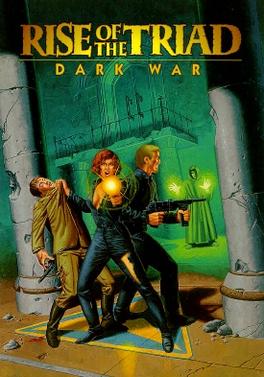 Compare: movement and multiplayer
Rise of the Triad
1994Rise of the Triad and Quake III Arena both make fast movement, powerful weapons and multiplayer combat central attractions.