
Published:
Summary
Half-Life (1998) turned a routine day at Black Mesa into the worst workplace induction imaginable. As Gordon Freeman, you watched an experiment go catastrophically wrong, then fought aliens, soldiers, and malfunctioning machinery without the game ever dragging you into traditional cutscenes. Scientists shouted warnings, security guards tagged along, and scripted events made the facility feel disturbingly alive. Clever puzzles and sharp gunplay kept the journey varied, while headcrabs made every ventilation shaft suspicious.
What it does well
Brilliant pacing, memorable set-pieces, smart environmental storytelling, satisfying weapons, and characters that made Black Mesa feel alive.
Where it falls short
Xen was weaker, platforming could feel awkward, enemy soldiers were punishing, and some late sections dragged.
Verdict
A revolutionary shooter that made first-person storytelling feel natural, immersive, and far more cinematic than its contemporaries.
Half-Life - version notes
Version-specific observations from the gameplay video. Tap a time to jump straight to that moment.
PC (5 Beats)
- First shot: Half-Life was Valve's debut game, released on 19 November 1998 after the studio formed in 1996.
- No cutaway: scripted events unfold through Gordon's eyes, keeping story and gameplay together instead of switching to cinematic cutscenes.
- Crowbar feedback: Valve chose the crowbar partly because smashing crates and clanging walls simply felt satisfying during testing.
- One long journey: conventional levels disappear into a continuous chain of locations, interrupted mainly by brief loading points.
- Mod launchpad: Half-Life's mod scene produced Counter-Strike and helped establish Valve's long relationship with community developers.
Connected Games
Explore the links between these games.
-
 Engine Heritage
Quake III Arena
1999Both games trace their technology back to id Software's original Quake engine, although Half-Life's GoldSrc and Quake III's id Tech 3 evolved along separate paths.
-
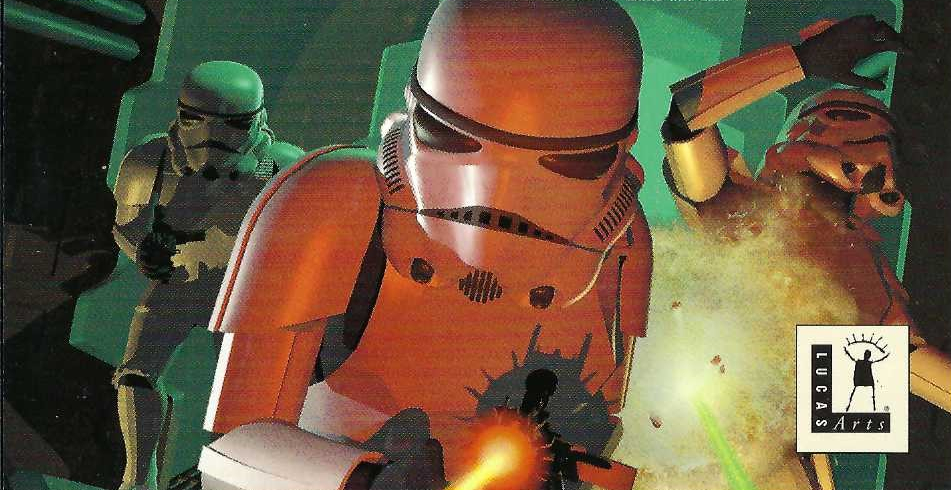 Genre Evolution
Star Wars: Dark Forces
1995Dark Forces brought mission objectives and environmental interaction to the FPS, while Half-Life pushed the genre further with continuous storytelling and scripted sequences.