
Published:
Summary
Operation Wolf (1987) shoved an Uzi into your hands, pointed you at a scrolling battlefield, and expected your trigger finger to survive the trip. Taito's mounted light-gun cabinet made every helicopter, soldier, tank, and flying grenade feel alarmingly personal, while rescuing hostages added just enough responsibility to interrupt the carnage. Ammunition and damage constantly demanded attention, so spraying bullets everywhere was a quick route to disaster. Loud, frantic, and wonderfully physical, it turned the arcade into an action movie where you supplied the recoil.
What it does well
Excellent arcade gun cabinet, frantic pacing, memorable set-pieces, satisfying grenade shots, and constant pressure from ammunition and damage.
Where it falls short
Repetitive enemy waves, relentless difficulty, limited tactical depth, and home conversions rarely matched the arcade gun experience.
Verdict
A blisteringly physical arcade shooter that made light-gun action feel immediate, cinematic, and wonderfully difficult to put down.
Operation Wolf - version notes
Version-specific observations from the gameplay video. Tap a time to jump straight to that moment.
Amiga (2 Beats)
- One step ahead: Although the Amiga and Atari ST versions are visually very similar, the Amiga version runs faster and with stronger sounds.
- Arcade artwork: Taito supplied original graphic data, helping the Amiga and ST look much closer to the coin-op.
Amstrad (3 Beats)
- Wolf in sheep's clothing: reviewers praised Ocean for squeezing such an ambitious arcade conversion onto the CPC.
- Memory warfare: CPC 464 owners had to fight the enemy and the tape deck, with each stage loaded individually on a 64K machine.
- Phaser update: a 1989 edition supported the Amstrad Magnum Light Phaser for direct screen aiming.
Arcade (3 Beats)
- Physical feedback: the arcade's mounted Uzi-style gun kicked during automatic fire, an experience home conversions could not reproduce.
- Ammo matters: bullets and grenades are limited, while scenery targets can reveal supplies, discouraging uncontrolled spraying.
- Animal bonuses: shooting passing vultures and pigs can reveal health or ammunition, adding some bizarre arcade logic.
Atari ST (2 Beats)
- Mouse fire: left and right buttons handle bullets and grenades, giving the ST faster, more precise aiming.
- Battlefield talk: Some of the arcade game's speech survived the conversion, along with most of its between-mission screens.
Commodore 64 (3 Beats)
- Friendly fire: shooting civilians or rescued hostages adds damage, making trigger discipline essential.
- Arcade intensity: the C64 keeps soldiers, helicopters, boats and armour flowing without abandoning the frantic first-person format.
- Light gun optional: a later C64 release supported the Light Phaser for direct screen aiming.
Spectrum (2 Beats)
- Monochrome ops: reduced colour avoids heavy clash while keeping soldiers, vehicles and explosions surprisingly clear.
- Phaser engaged: A later version supported the Magnum Light Phaser, allowing Spectrum owners to aim directly at a compatible CRT television.
Connected Games
Explore the links between these games.
-
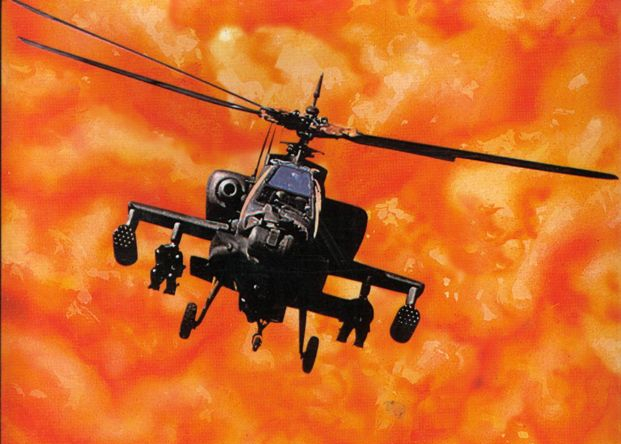 Compare: combat and rescue
Desert Strike
1992Operation Wolf and Desert Strike mix shooting with rescuing people, while making ammunition and damage important constraints.
-
 Compare: action-movie combat
Gryzor (aka Contra)
1987Gryzor and Operation Wolf both deliver military action against waves of enemies, but one emphasises platform movement and the other aiming.
-
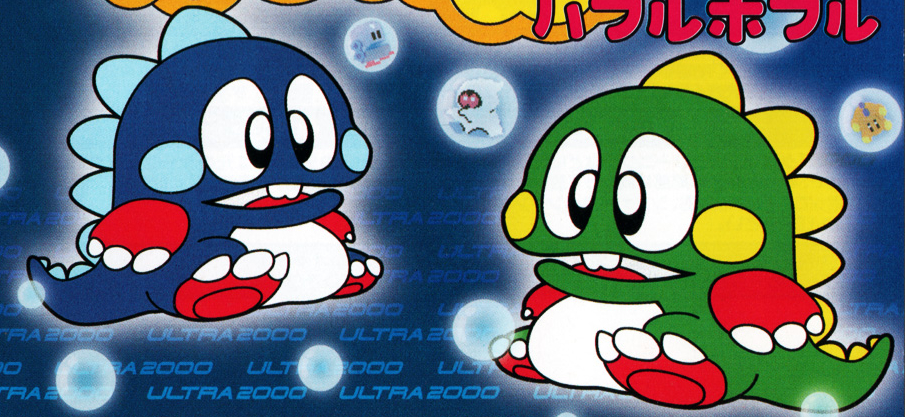 Taito connection
Bubble Bobble
1986Two contrasting Taito releases: Bubble Bobble (1986) and Operation Wolf (1987).