
Published:
Summary
Maniac Mansion (1987) invited you to pick a trio of teenagers and trespass into the Edison household, where every room hid a gag, a trap, or a way to accidentally doom your friends. Its point-and-click style let you poke, pull, microwave, and misbehave, while multiple solutions made you feel clever - or guilty. The tone was pure B-movie mischief: goofy, creepy, and oddly charming. Different kids unlocked different routes, so replays felt like new capers rather than a rerun. It was less about reflexes and more about curiosity, experimentation, and laughing when your 'plan' backfired.
What it does well
Brilliant writing, multiple solutions, memorable characters, satisfying puzzles, and replays that genuinely changed how you approached the mansion.
Where it falls short
Occasional moon-logic, easy to miss key items, sudden fail states, and interface quirks that slowed momentum in tense moments.
Verdict
A genre-shaping comedy-horror adventure that rewarded experimentation, and stayed funny even when it punished your curiosity.
Maniac Mansion - version notes
Version-specific observations from the gameplay video. Tap a time to jump straight to that moment.
Amiga (2 Beats)
- Control: moving to a mouse-driven Amiga setup makes the interface feel more natural than the joystick-heavy 8-bits.
- Port phase: the Amiga version is part of the later 16-bit wave of ports that followed the original C64/Apple II release.
Apple II (2 Beats)
- Launch platform: the Apple II was a day-one lead platform alongside the C64 (same initial release date).
- Self-published statement: it was Lucasfilm Games' first self-published release, which is a big part of why it became a studio-defining template.
Atari ST (2 Beats)
- Security: the ST version sits in the later wave where the mansion's upstairs door is replaced by the Steel Security Door (copy-protection related).
- Design: The ST version is positioned as a proper point-and-click compared to how the 8-bit versions played.
Commodore 64 (3 Beats)
- Lead machine: development was built around the Commodore 64 and its 64KB limits, which heavily shaped the game design and presentation.
- Movement: smooth bitmap scrolling was impractical on C64, so the team used lower-detail tile graphics to enable scrolling rooms.
- Non-linear design: the structure was built so runs could be completed in different ways depending on who you brought.
NES (2 Beats)
- Censorship logic oddity: suggestive content drew objections from NES, but the infamous hamster fate was not flagged in the same way.
- Tide change: the NES cart introduced a lot of console-only players to point-and-click style adventures, despite the compromises.
PC (2 Beats)
- Graphics modes: the DOS manual lists hotkeys to force EGA / CGA / VGA modes (Shift-E / Shift-C / Shift-V).
- Extra polish: DOS is a later computer release, so it benefits from maturity beyond the very earliest C64-first generation.
Connected Games
Explore the links between these games.
-
 Compare: troublesome houses
Pyjamarama
1984Pyjamarama and Maniac Mansion turn houses into strange puzzle spaces where exploring rooms and experimenting with objects drives progress.
-
 Compare: mansion mysteries
The 7th Guest
1993The 7th Guest and Maniac Mansion use unsettling houses as settings for puzzles, with different balances of horror, humour and storytelling.
-
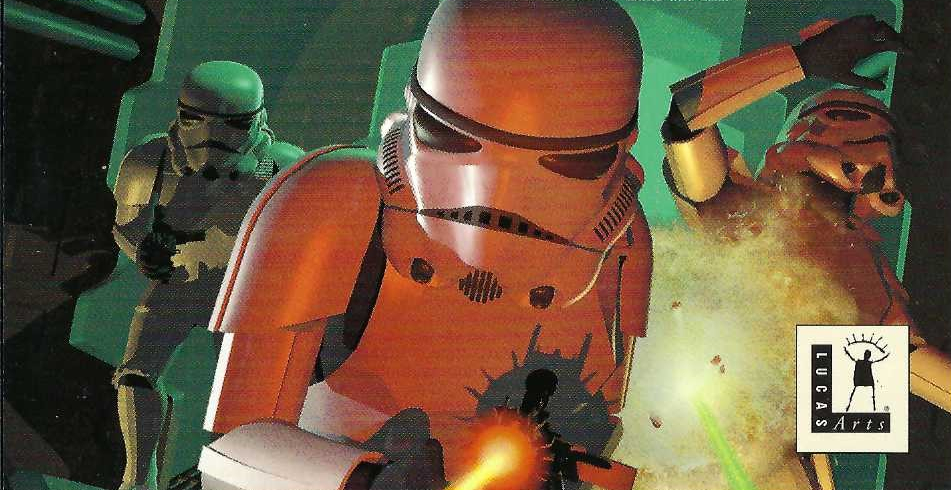 LucasArts connection
Star Wars: Dark Forces
1995Maniac Mansion and Dark Forces connect two very different sides of the LucasArts games catalogue.