
Published:
Summary
Doom started as a quiet Mars assignment and immediately escalated into shotguns, demons, and a full-blown trip to Hell. First discovered via shareware floppies, it devoured hours with clever levels, hidden secrets, and monsters lurking just out of sight. The atmosphere was thick with dread, the action was ferociously fast, and deathmatches over dodgy LAN setups turned friendships into frag-count rivalries. Lights off, headphones on - bravery optional.
What it does well
Iconic level design, blistering combat, oppressive atmosphere, brilliant secrets, and endlessly replayable deathmatches.
Where it falls short
Limited storytelling, repetitive enemies, no vertical aiming, and multiplayer that relied heavily on luck and cables.
Verdict
A revolutionary shooter that mixed speed, fear, and sheer attitude into an unforgettable demon-slaying masterpiece.
Doom - version notes
Version-specific observations from the gameplay video. Tap a time to jump straight to that moment.
PC (5 Beats)
- Enemy design: monsters are built around sound and line-of-sight rules, not complex AI.
- Texture origins: many wall textures were created from real-world photos scanned and heavily altered.
- Level philosophy: maps were designed like combat puzzles, not realistic buildings.
- Shareware strategy: releasing the first episode for free was a calculated move to spread the game virally.
- Cultural shift: Doom redefined what PC games were for, turning them into social, competitive experiences.
PS1 (5 Beats)
- Design pivot: the PS1 version was intentionally reimagined as slower and more atmospheric.
- Lighting overhaul: real-time coloured lighting was added, fundamentally changing how enemies and spaces are read.
- Music shift: ambient industrial soundtrack heightened tension rather than adrenaline.
- Weapon feel: firing rates and sound effects were adjusted to feel heavier and more deliberate.
- Horror emphasis: darker palettes and fog were used to push Doom closer to survival horror than pure action.
SNES (4 Beats)
- See no evil: the SNES version uses a reduced resolution that trades clarity for performance.
- Design compromise: levels were heavily simplified because the SNES could not handle Doom’s original enemy counts.
- Historical marker: it represents the absolute limit of what 16-bit consoles could achieve before true 3D took over.
- Technical statement: Doom on SNES exists less as a commercial necessity and more as a proof-of-concept.
Connected Games
Explore the links between these games.
-
 Compare: horror shooters
Blood
1997Doom and Blood combine fast first-person combat, horror imagery and secret-filled levels.
-
 Compare: shooter structure
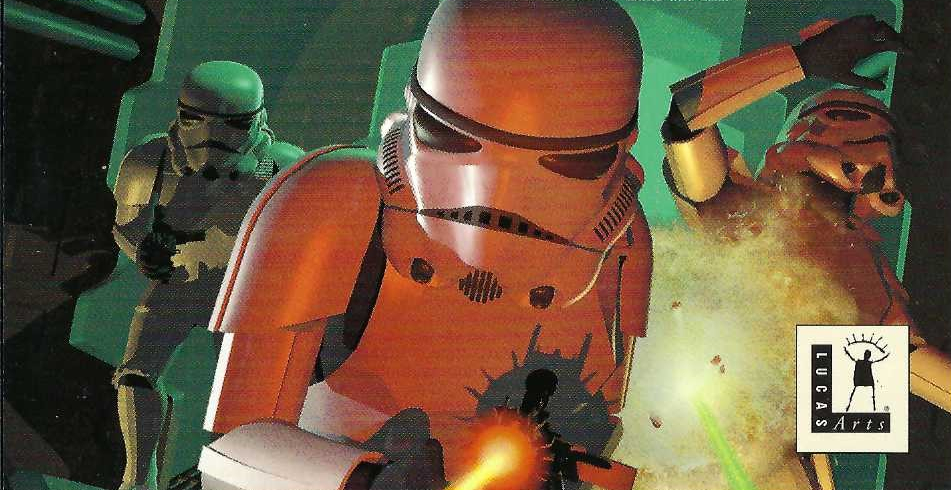
Star Wars: Dark Forces
1995Compare Doom with Dark Forces: both explore hostile spaces in first person, while Dark Forces adds explicit mission objectives.
-
 id Software connection
Quake III Arena
1999Doom and Quake III Arena were both developed by id Software.
-
 Compare: combat in 3D space
Descent
1995Doom's on-foot combat and Descent's freely rotating ship offer very different ways to navigate a hostile shooter level.
-
 FPS Evolution
Unreal Tournament
1999Doom popularised multiplayer deathmatches in 1993, laying the foundations for the competitive arena combat that Unreal Tournament would take to new heights six years later.